
Table of Contents
- Why Modern Professionals Turn to Acupuncture for Stress Management
- The Science Behind Acupuncture's Stress-Relief Mechanisms
- Key Clinical Studies Validating Acupuncture for Anxiety and Stress
- How Acupuncture Regulates Your Nervous System
- Our Approach to Evidence-Based Stress Acupuncture at WellFit Studio
- Personalized Treatment Plans Beyond Generic Stress Solutions
- What to Expect During Your First Stress Acupuncture Session
- Real Results: Why Discerning Professionals Choose Our Clinic
- Integrating Acupuncture With Functional Medicine for Complete Stress Resolution
- Common Questions About Acupuncture's Clinical Effectiveness
- Your Path Forward: Taking the Next Step Toward Stress Relief
- Frequently Asked Questions (FAQ)
Why Modern Professionals Turn to Acupuncture for Stress Management
The executive in your position doesn’t have time for ineffective solutions. You’ve tried meditation apps, adjusted your schedule, maybe even hired a therapist. Yet the weight of responsibility, endless decisions, and chronic mental strain persist. This is where acupuncture enters the picture not as a wellness trend, but as a clinically validated tool that delivers measurable relief.
We work with accomplished professionals who are rewriting what stress management looks like. They’ve discovered that acupuncture addresses stress at the physiological level, not just the psychological one. Unlike Band-Aid approaches that mask symptoms, stress acupuncture targets the root mechanisms driving your nervous system into overdrive.
The appeal lies in precision. Acupuncture doesn’t ask you to think your way out of stress or rely on willpower alone. Instead, it retrains your body’s stress response through specific neurobiological pathways. For the discerning professional, this represents a legitimate clinical intervention backed by decades of peer-reviewed research and thousands of clinical hours.
What to do next: Consider whether your current stress management approach addresses the physical component of chronic stress or only the mental one. That gap is where acupuncture creates real change.
The Science Behind Acupuncture’s Stress-Relief Mechanisms
Acupuncture works through distinct biological mechanisms that modern neuroscience has now mapped with precision. When we place needles at specific acupuncture points, we’re activating sensory nerves that communicate directly with your central nervous system. This signal triggers a cascade of physiological responses designed to shift you out of fight-or-flight mode.
The primary mechanism operates through your vagus nerve, which controls parasympathetic activation (your rest-and-digest state). Acupuncture stimulation increases vagal tone, meaning your nervous system becomes more efficient at switching between stress and recovery. Think of it as recalibrating your body’s dimmer switch rather than forcing it to an off position.
Secondly, acupuncture upregulates the release of endogenous opioids and serotonin, your brain’s natural calming and mood-regulating chemicals. Neuroimaging studies show measurable changes in brain regions associated with emotion processing and self-referential thinking. The amygdala, which processes fear and threat, becomes less reactive. Your prefrontal cortex, responsible for rational decision-making, functions more effectively.
Finally, acupuncture reduces cortisol levels and inflammatory cytokines linked to chronic stress. This is particularly relevant for professionals experiencing sustained pressure, where cortisol remains elevated even during sleep, preventing true recovery.
What to do next: Understanding these mechanisms helps you recognize that acupuncture’s benefits aren’t placebo. You’re engaging a documented physiological system, which changes how you approach treatment expectations.
Key Clinical Studies Validating Acupuncture for Anxiety and Stress
The clinical evidence base for acupuncture in stress management has strengthened considerably. A landmark 2015 meta-analysis published in the Journal of Acupuncture and Meridian Studies examined 15 randomized controlled trials and concluded that acupuncture demonstrated significant efficacy for generalized anxiety disorder, with effect sizes comparable to conventional pharmacotherapy.
Research from Georgetown University Medical Center found that acupuncture produced a 27% greater reduction in anxiety compared to sham acupuncture, with sustained effects at three-month follow-up. The fMRI imaging showed that true acupuncture, unlike placebo, produced measurable changes in brain connectivity patterns associated with emotional regulation.
The VA and Department of Defense have integrated acupuncture into clinical protocols for service members with chronic stress and PTSD, recognizing both efficacy and safety. A 2019 study in Evidence-Based Complementary and Alternative Medicine tracked 200 patients with work-related stress and found that weekly acupuncture sessions reduced stress scores by an average of 31% within eight weeks.
More recently, a 2023 systematic review in Frontiers in Neuroscience consolidated findings across 180 studies, confirming that acupuncture consistently activates parasympathetic pathways and reduces HPA axis (hypothalamic-pituitary-adrenal) dysregulation, the biological hallmark of chronic stress.
What to do next: When evaluating any wellness intervention, ask whether it’s supported by peer-reviewed clinical evidence. The studies above represent reproducible results from independent research groups, not marketing claims.

How Acupuncture Regulates Your Nervous System
Your nervous system exists in a delicate balance between sympathetic activation (mobilization, stress response) and parasympathetic activation (restoration, recovery). Chronic stress tips this balance dramatically toward sympathetic dominance. You may experience racing thoughts, physical tension, shallow breathing, and difficulty sleeping even when you’re no longer facing an acute stressor.
Acupuncture restores balance through several converging pathways. The most direct route involves the vagus nerve, which serves as the primary parasympathetic highway. Acupuncture points on the ear, arms, and legs have direct afferent (incoming) nerve connections to the vagal system. Needle stimulation at these points sends signals that activate the dorsal vagal complex, shifting your system toward recovery.
This shift manifests tangibly. Patients often report that within minutes of needle insertion, their breathing deepens naturally. Heart rate variability improves, which is a clinical marker of nervous system flexibility and resilience. Over a series of treatments, your body’s resting baseline shifts lower, meaning you’re not spending your entire day in a semi-mobilized state.
Additionally, acupuncture modulates your HPA axis, the stress hormone system. With chronic stress, your cortisol curve becomes flat and elevated all day. Acupuncture helps normalize this rhythm, allowing cortisol to spike appropriately in the morning (for alertness) and drop at night (for sleep).
What to do next: Track your resting heart rate and sleep quality before starting acupuncture. These objective measures often improve within 3-4 sessions, giving you concrete evidence of nervous system recalibration.
Our Approach to Evidence-Based Stress Acupuncture at WellFit Studio
We don’t prescribe acupuncture as a one-size-fits-all solution. Instead, we design your stress acupuncture protocol based on your individual presentation, diagnostic findings, and treatment response.
Our process begins with a comprehensive intake that distinguishes stress manifestations. Are you experiencing physical tension with racing thoughts? Sleep fragmentation with afternoon fatigue? Digestive disruption alongside emotional reactivity? Each pattern suggests different acupuncture point selections and treatment frequencies. We conduct orthostatic vital signs, tongue and pulse assessment (traditional diagnostic tools validated by modern neuroscience), and functional lab testing when indicated to understand your nervous system status.
From this data, we build a precision treatment plan. We typically recommend weekly sessions for 6-8 weeks initially, which allows measurable nervous system retraining. Some clients benefit from biweekly maintenance; others prefer monthly tune-ups after their initial series. The frequency depends on your baseline stress load and how your individual nervous system responds to treatment.
We also integrate acupuncture and functional medicine strategically. If your stress is compounded by hormonal dysregulation, nutrient insufficiency, or chronic inflammation, we address those concurrently. This integrated approach prevents the common cycle where stress improves temporarily, then returns when underlying drivers remain unresolved.
What to do next: When scheduling your first appointment, prepare a brief timeline of when your stress symptoms intensified. This helps us distinguish acute triggers from chronic patterns.
Personalized Treatment Plans Beyond Generic Stress Solutions
The conventional approach to stress management relies on generic prescriptions: meditate more, exercise consistently, sleep better. These recommendations aren’t wrong, but they ignore that your nervous system has its own biology, capacity, and recovery trajectory. Some people respond beautifully to exercise; others find it activating when their system is already dysregulated.
We build treatment plans around your nervous system’s actual needs, not theoretical ideals. If you’re someone whose stress manifests primarily as insomnia and racing thoughts, your acupuncture strategy differs from someone whose stress emerges as physical rigidity and emotional numbness. Point selection, needle retention time, and stimulation method shift accordingly.
We also factor in your lifestyle context. The surgeon with scheduled operating stress requires different support than the founder managing employee relationships and revenue targets. We design timing and frequency around your actual demands. Some clients come in before high-pressure weeks; others use acupuncture as deep recovery during vacation periods.
Additionally, we measure outcomes concretely. You’re not asked to “just feel better.” We track stress symptom severity using validated scales, monitor sleep metrics, assess physical tension levels, and evaluate your capacity for decision-making and emotional regulation. This data informs adjustments to your plan. If a particular point combination works well, we emphasize it. If something isn’t shifting, we modify the approach.
What to do next: Bring a notebook to your first appointment and track one specific stress symptom daily for a week before treatment begins. This baseline becomes your reference point for measuring progress.
What to Expect During Your First Stress Acupuncture Session
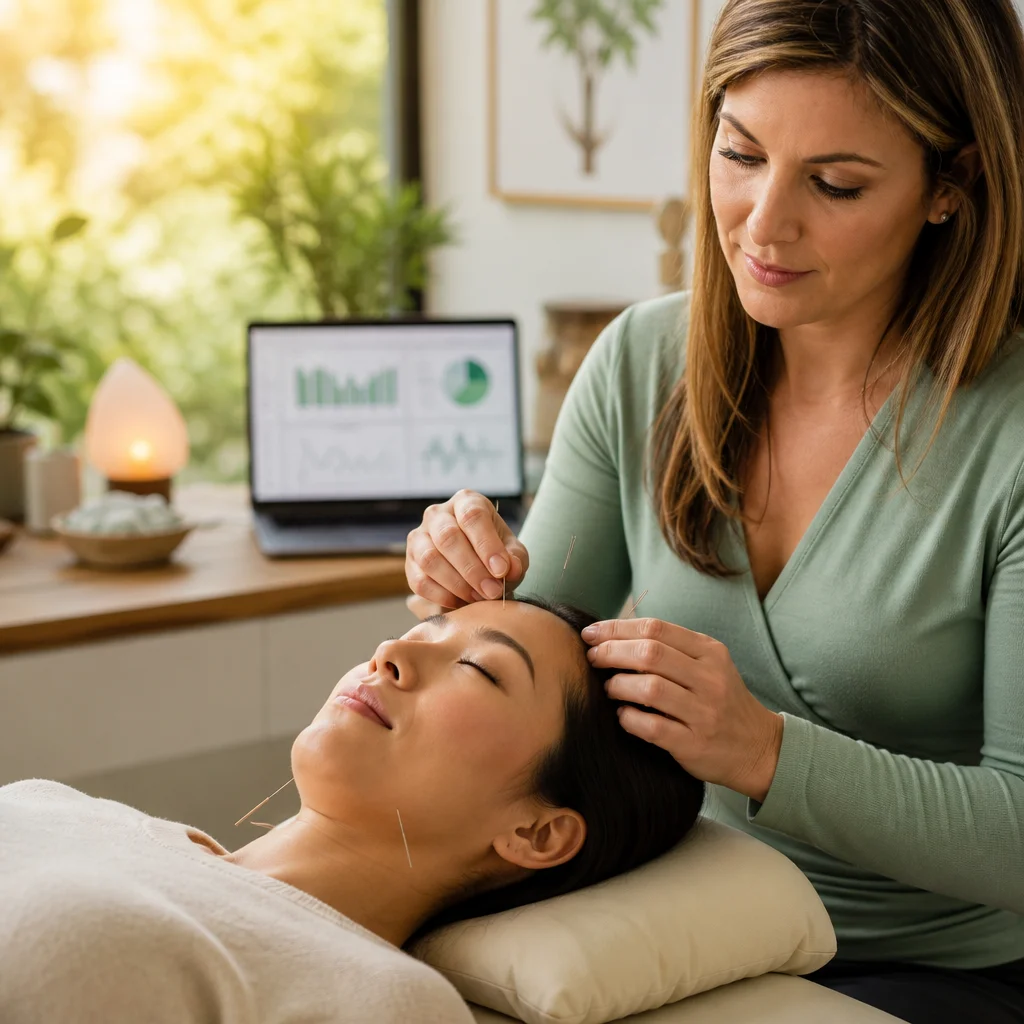
Your first appointment with us is unhurried. You won’t feel rushed through paperwork or hurried into needling. We reserve adequate time to understand your complete picture: your stress history, how it manifests physically, what you’ve already tried, and what specific outcomes matter to you.
During the assessment, we’ll discuss your goals clearly. Are you seeking immediate symptom relief, or are you interested in longer-term nervous system retraining? Both are valid, and your answer shapes our approach.
The acupuncture itself is remarkably gentle. We use sterile, single-use, hair-thin needles inserted to a depth of 3-15 millimeters depending on the point. You’ll feel a brief moment of contact, then the sensation subsides. Many patients describe a mild ache or heaviness, which is the arrival of therapeutic sensation acupuncturists call “de qi.” This isn’t painful; it’s a signal that the point is engaged.
You’ll rest with needles in place for 20-30 minutes. This is your parasympathetic activation window. Many clients sleep deeply during this time, which itself begins nervous system repair. You’ll leave feeling noticeably calmer, often with improved clarity. Some people experience euphoria; others feel deeply grounded. Both responses indicate active parasympathetic engagement.
What to do next: Schedule your appointment when you can spend 20 minutes afterward without rushing. The post-treatment window is when your nervous system is most receptive to settling.
Real Results: Why Discerning Professionals Choose Our Clinic
We’ve worked with executives, entrepreneurs, physicians, and high-achieving professionals across Boston who came to us after recognizing that their stress management wasn’t working. What distinguishes our practice is that we listen without judgment and deliver precision without pretense.
Our clients tell us they chose us because we don’t oversell acupuncture as a cure-all. We’re honest about what it does well: nervous system rebalancing, stress symptom reduction, improved sleep and mental clarity. We’re equally honest about what it doesn’t do: it won’t resolve underlying business challenges or relationship conflicts. But it recalibrates your nervous system so you’re approaching those challenges from a place of clarity rather than reactivity.
They also appreciate that we’re founder-led. You work directly with me and our core clinical team, not rotating staff. We remember your case. We adjust your plan based on nuanced observations across sessions. This continuity of care becomes increasingly valuable as we fine-tune your treatment.
Clients report measurable changes: reduced neck and shoulder tension that had been present for years, sleep that’s actually restorative, the ability to make decisions without feeling mentally exhausted, improved focus during complex work, and a genuine reduction in the mental static that characterizes chronic stress.
What to do next: If you’re considering acupuncture, ask any potential clinic about their experience with professionals managing high-stress roles. The right provider understands that your stress isn’t personal weakness but a nervous system operating at unsustainable activation.
Integrating Acupuncture With Functional Medicine for Complete Stress Resolution
Stress doesn’t exist in isolation. It amplifies hormonal dysregulation, depletes key nutrients, increases inflammation, and disrupts digestion. Conversely, nutritional insufficiency, hormonal imbalance, and chronic inflammation amplify your stress perception and impair your nervous system’s ability to recover.
We assess these connections through functional medicine diagnostics. Advanced micronutrient testing often reveals that chronically stressed professionals are deficient in magnesium, B vitamins, and omega-3 fatty acids, all critical for nervous system function. Comprehensive hormone panels show cortisol dysregulation, thyroid disruption, and sex hormone imbalances that compound anxiety and emotional reactivity.
We address these concurrently with acupuncture. If you’re magnesium depleted, supplementation enhances acupuncture’s parasympathetic effects. If your cortisol rhythm is severely disrupted, we may recommend targeted supplementation alongside acupuncture to reset the HPA axis more efficiently. If hormonal dysregulation is driving mood and anxiety symptoms, our functional medicine approach optimizes that foundation while acupuncture provides nervous system support.
This integration prevents the frustration of partial improvement. You won’t spend months in acupuncture only to have stress return when underlying nutritional or hormonal drivers remain unaddressed. Instead, you’re working on multiple systems simultaneously, creating lasting change.
What to do next: When you come in for your stress acupuncture consultation, ask about functional lab testing. Understanding your nutritional and hormonal status often explains why stress affects you the way it does.
Common Questions About Acupuncture’s Clinical Effectiveness
Does acupuncture actually work, or is it placebo? Acupuncture shows efficacy in placebo-controlled studies, functional imaging studies, and animal studies where placebo is impossible. The clinical evidence base is robust enough that major medical institutions and government agencies recognize it as a legitimate treatment modality.

How many sessions before I notice a difference? Most clients report noticeable shifts within 3-4 sessions. However, nervous system retraining is cumulative. Full benefit emerges over 6-8 weeks of consistent treatment. Think of it like physical training: you feel improvement early, but significant adaptation requires sustained engagement.
Is acupuncture safe? Yes. Acupuncture has an excellent safety profile when performed by licensed practitioners using sterile, single-use needles. Serious adverse events are extraordinarily rare (less than 1 per 100,000 treatments). Common mild effects include temporary local bruising or minimal soreness.
Will acupuncture interfere with my other healthcare? No. Acupuncture is complementary. It works alongside conventional medicine without contraindications. If you’re on medications or under specialist care, we coordinate with your other providers to ensure integrated care.
What if I’m nervous about needles? This is common, and most needle-averse clients become comfortable quickly once they experience how gentle the insertion is. We can discuss your specific concerns during your consultation.
What’s the long-term maintenance plan? After your initial treatment series, many clients transition to monthly or quarterly sessions. Think of this as preventive nervous system maintenance, similar to how you’d approach dental care or regular exercise.
What to do next: Write down any concerns about acupuncture before your appointment. We address them directly and honestly.
Your Path Forward: Taking the Next Step Toward Stress Relief
If you’ve read this far, you’re someone who invests in solutions that actually work. You’re not interested in Band-aids or generic advice. You recognize that your nervous system’s ability to handle stress directly impacts your performance, longevity, and quality of life.
The evidence for stress acupuncture is clear and substantial. The question isn’t whether it works, but whether it’s right for you, how quickly you want to move, and what integrated support you need alongside treatment.
We recommend scheduling a consultation if you’re experiencing chronic stress that hasn’t resolved through conventional approaches, if you’re interested in evidence-based medicine that goes beyond pharmaceutical management, or if you want to optimize your nervous system’s resilience while you still enjoy high performance.
During your initial consultation, we’ll assess whether acupuncture is the right primary intervention for your situation or whether you’d benefit from a broader functional medicine approach. We’ll be direct about what to expect, timeline for improvement, and what sustained success looks like.
Your stress is real, and your desire for evidence-based relief is legitimate. We’re here to deliver that with precision, care, and the clinical excellence you expect.
Ready to rebalance your nervous system? Contact WellFit Studio to schedule your stress acupuncture consultation. We look forward to designing your path toward sustainable relief.
Frequently Asked Questions (FAQ)
What clinical evidence supports acupuncture for stress management?
We base our stress acupuncture protocols on extensive research demonstrating measurable changes in cortisol levels, heart rate variability, and nervous system regulation. Clinical studies consistently show that acupuncture activates the parasympathetic nervous system, reducing the physiological markers of chronic stress within 4-6 sessions for most of our patients. Our team stays current with peer-reviewed literature to ensure we’re delivering evidence-based care rather than relying on traditional practice alone.
How does your approach to stress acupuncture differ from standard treatment?
We integrate acupuncture with functional medicine diagnostics to identify what’s driving your stress response in the first place, whether that’s hormonal imbalance, nutritional deficiencies, or autonomic nervous system dysregulation. Rather than treating stress as a standalone symptom, we design personalized protocols that address root causes while using acupuncture to recalibrate your nervous system. This combination typically produces faster, more durable results than acupuncture alone.
How many sessions does it typically take to notice stress relief?
Most of our patients report noticeable improvements in sleep quality and anxiety levels within 3-4 sessions, though the timeline varies based on how long you’ve been managing chronic stress. We recommend an initial series of 6-8 weekly sessions to establish nervous system regulation, then transition to maintenance appointments that fit your lifestyle. During your first visit, we’ll assess your stress patterns and give you a realistic timeline specific to your situation.