

Table of Contents
- Why Traditional Physical Therapy Alone Often Falls Short
- The Science Behind Acupuncture and Tissue Healing
- How We Integrate Acupuncture Into Your Recovery Plan
- Addressing Root Causes While Rebuilding Strength
- Real Results: When Acupuncture Accelerates Your Progress
- Personalized Protocols Designed for Your Body's Needs
- The Role of Functional Medicine in Complete Healing
- Timeline to Notice Meaningful Improvement
- Your Next Step Toward Lasting Recovery
- Frequently Asked Questions (FAQ)
Why Traditional Physical Therapy Alone Often Falls Short
The partnership between acupuncture and physical therapy isn’t a new idea, yet many people pursuing recovery from injury or chronic pain don’t realize how powerfully these two modalities complement each other. At WellFit Studio, we’ve observed that patients who combine acupuncture with their physical therapy protocols often progress faster, experience less pain during rehabilitation, and achieve more durable results than those relying on exercise alone.
This isn’t anecdotal. The acceleration happens because acupuncture addresses the physiological barriers that can otherwise slow tissue healing and limit your body’s adaptive capacity during recovery.
Physical therapy is undeniably valuable. Targeted exercises rebuild strength, restore mobility, and retrain neuromuscular patterns. Yet conventional rehabilitation programs, delivered in standard protocols, often overlook one critical factor: the individual inflammatory response and circulatory limitations that persist beneath the surface.
Consider someone recovering from a shoulder rotator cuff strain. The physical therapist prescribes excellent exercises, and the patient complies. Yet pain plateaus at week four, mobility stalls, and the program feels stuck. Why? The underlying tissue may still be trapped in a pro-inflammatory state, local blood flow may be compromised, and neural pathways may remain hypersensitive. The exercise is sound, but the environment in which that tissue exists isn’t optimized for healing.
Traditional physical therapy excels at movement retraining and strength building, but it rarely addresses the vascular and inflammatory terrain that determines how quickly tissues actually heal. This is where the limitation becomes apparent: rehabilitation without simultaneous optimization of circulation, inflammation, and neural signaling asks tissue to heal in a suboptimal state.
The Science Behind Acupuncture and Tissue Healing
Acupuncture stimulates localized increases in blood flow, activates endogenous pain-modulation pathways, and downregulates inflammatory cytokines at the site of injury. Research demonstrates that acupuncture increases oxygen and nutrient delivery to damaged tissues, accelerates the remodeling phase of wound healing, and reduces pain-related neural sensitization.
The mechanism is elegant: fine needles placed at precise anatomical points trigger a mild immune response that recruits blood, growth factors, and regenerative cells to the damaged area. Simultaneously, acupuncture activates parasympathetic tone, downshifting the nervous system out of the protective “guarding” response that often locks muscles in tension and limits movement.
This matters clinically because inflammation and nervous system reactivity are often the bottlenecks in recovery. A tissue can have excellent mechanical loading (from physical therapy), but if local circulation is poor and the nervous system remains hypervigilant, progress slows. Acupuncture removes these invisible barriers.
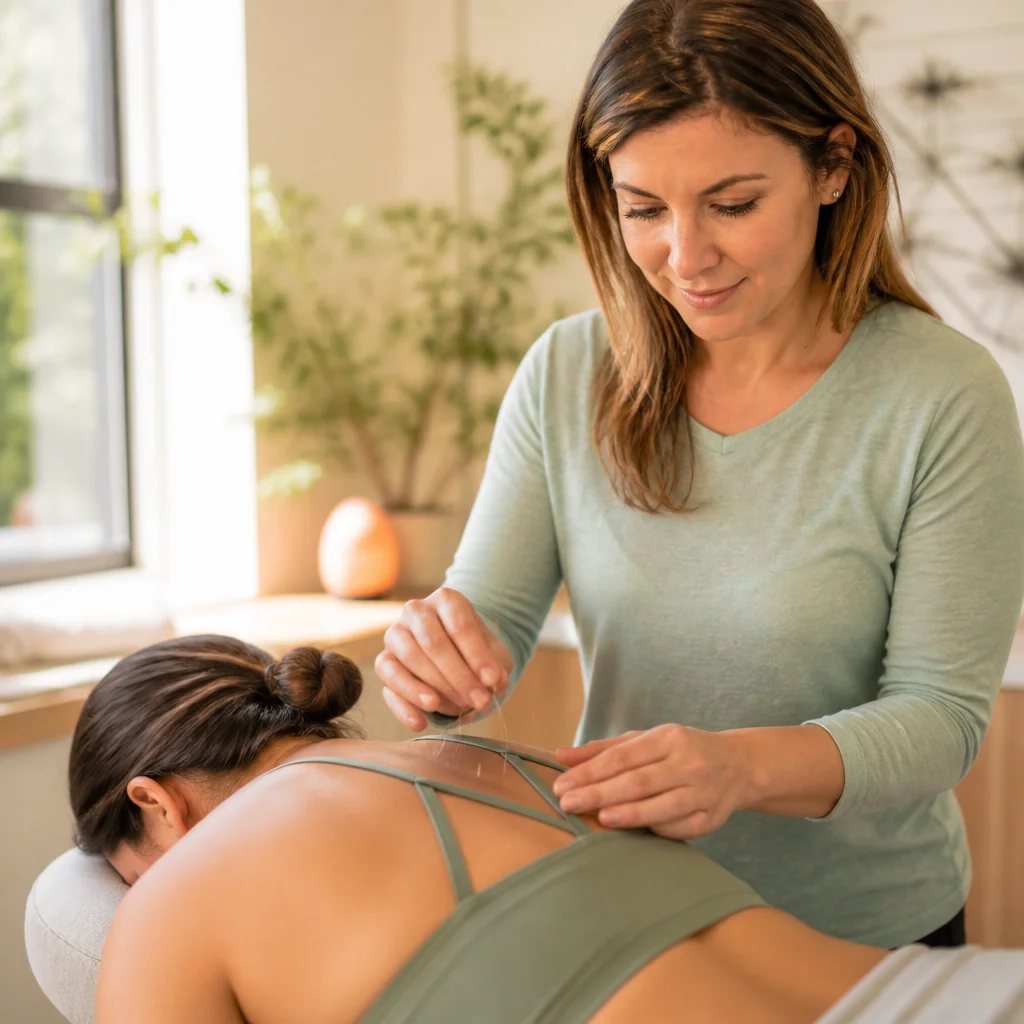
The pain relief itself is neuropharmacological: acupuncture stimulation upregulates endogenous opioids, serotonin, and GABA at both local and spinal levels. You’re not masking pain; you’re restoring the body’s natural pain-dampening capacity so rehabilitation exercises become tolerable and effective, rather than aggravating.
How We Integrate Acupuncture Into Your Recovery Plan
Our approach begins with a complete assessment: we listen to your injury history, understand your functional goals, and evaluate the specific tissues and systems involved. We then design a synchronized protocol where acupuncture and physical therapy work in deliberate concert, rather than in isolation.
Typically, we place acupuncture sessions strategically within your rehabilitation cycle. Many patients benefit from acupuncture 24 to 48 hours before or after intensive physical therapy work, allowing treatment to prepare tissues for loading and then accelerate recovery afterward. In other cases, we integrate acupuncture into the same week as your PT sessions, timing needling to optimize the window when your nervous system and tissues are most receptive to healing stimulus.
We also coordinate directly with your physical therapist. With your permission, we share observations about tissue quality, restrictions, and response patterns so everyone working on your recovery shares the same picture. This level of integration is rare in fragmented healthcare; it’s also essential.
Your protocol isn’t based on a template. It’s built from your diagnostic picture: functional lab testing, movement assessment, pain patterns, and your individual recovery timeline and goals.
Addressing Root Causes While Rebuilding Strength
Acupuncture integrated with physical therapy also creates an opportunity to investigate why the injury happened in the first place. Many injuries are symptoms of deeper imbalances: postural dysfunction, chronic tension patterns, nutritional deficiencies that compromise tissue integrity, or hormonal dysregulation that impairs healing capacity.
As we work with you on tissue recovery, we’re simultaneously conducting a deeper functional assessment to identify root causes. This might include functional lab testing to assess inflammation, nutritional status, or hormonal patterns. If we identify that poor sleep, inflammatory diet, or chronic stress is undermining your healing capacity, we address those concurrently.
This distinction matters enormously. You can rehabilitate tissue perfectly and still reinjure if the underlying drivers remain unaddressed. Our approach ensures that as you rebuild strength, you’re also removing the conditions that caused the problem.
Real Results: When Acupuncture Accelerates Your Progress
The patients we work with notice tangible shifts. Pain often begins to soften within the first few sessions, allowing more tolerance for therapeutic exercise. Mobility improvements typically accelerate in week three to five of integrated treatment, when acupuncture’s effects on circulation and inflammation are compounding with the strengthening work from PT.
Equally important, people report that their body feels less “stuck.” The combination reduces the rigid guarding pattern that often accompanies chronic pain or fear-avoidance after injury. You move with greater fluidity because the nervous system has begun to trust the tissue again.

We measure these results with objective assessments: range of motion tests, strength measurements, and functional movement screens repeated at regular intervals. We also trust your subjective report: “I’m sleeping better,” “I can sit at my desk without pain,” “I’m back to my morning run.” Those outcomes matter most.
Personalized Protocols Designed for Your Body’s Needs
We don’t believe in one-size-fit-all rehabilitation. Your acupuncture and physical therapy integration is completely personalized based on your tissue type, injury severity, nervous system reactivity, nutritional status, and personal recovery goals.
Some patients heal rapidly and need acupuncture for four to six weeks alongside PT. Others face more complex physiology and benefit from longer, more nuanced integration. We adjust based on your response, not on a predetermined schedule.
This tailoring extends to acupuncture technique itself: we may use different needle depths, retention times, or stimulation methods depending on whether your primary barrier is circulation, inflammation, pain processing, or nervous system dysregulation. Advanced practitioners recognize these distinctions; generic acupuncture protocols do not.
The Role of Functional Medicine in Complete Healing
Physical therapy and acupuncture address structure and nervous system function. Functional medicine adds a third dimension: nutritional and biochemical optimization.
Collagen synthesis requires vitamin C, amino acids, and adequate protein. Anti-inflammatory signaling requires omega-3 fatty acids and polyphenol-rich foods. Nervous system recovery benefits from adequate B vitamins and magnesium. If your nutritional status is suboptimal, your tissues heal slower, no matter how excellent your acupuncture and PT work.
Our functional medicine approach complements your recovery plan by ensuring your body has the nutritional substrates to rebuild tissue, regulate inflammation, and support nervous system healing. We may recommend targeted supplementation, dietary shifts, or combine functional lab testing with acupuncture protocols to identify hidden nutritional or inflammatory drivers that need addressing.
Timeline to Notice Meaningful Improvement
Most people experience noticeable pain relief within one to three acupuncture sessions, particularly if combined with physical therapy. You’ll likely feel your nervous system settle: better sleep, reduced muscle guarding, easier movement.
More substantial progress typically emerges between weeks three and eight. This is when the cumulative effects of improved circulation, reduced inflammation, and progressive strengthening compound. Functional capacity visibly improves. Mobility barriers that felt immovable begin to shift.

Full tissue remodeling takes longer. Depending on injury severity and tissue type, meaningful structural healing continues for twelve to twenty-four weeks. Our role during this extended period is to support that remodeling, adjust your protocol as you progress, and ensure you’re not reverting to old movement patterns or protective behaviors.
Individual variability is significant. Your timeline depends on your age, overall health, sleep quality, stress levels, and how consistently you engage with both acupuncture and physical therapy. We communicate these expectations clearly at the outset so you understand what realistic progress looks like.
Your Next Step Toward Lasting Recovery
If you’re currently in physical therapy and feeling stalled, or if you’ve recently experienced an injury and want to optimize your recovery from the start, scheduling a consultation is the logical next step. We’ll review your injury history, assess your current status, and design an integrated acupuncture and functional medicine protocol tailored to your body and your goals.
Recovery from injury isn’t just about time; it’s about creating the optimal conditions for healing. The combination of skilled acupuncture, physical therapy coordination, and functional medicine support accelerates that process, reduces pain during rehabilitation, and builds more durable results.
We’re here to guide you. Contact us to schedule your appointment and begin the journey toward lasting recovery.
Frequently Asked Questions (FAQ)
How does combining acupuncture with physical therapy produce better results than either treatment alone?
We’ve found that acupuncture and physical therapy work synergistically to accelerate healing. While physical therapy rebuilds strength and mobility, our acupuncture treatments reduce pain and inflammation, increase blood flow to injured tissues, and calm your nervous system so you can engage more fully in rehabilitation exercises. This dual approach means you progress faster with less compensation patterns and fewer setbacks.
How long does it typically take before we see meaningful improvement in your recovery?
Most of our clients notice initial pain relief and improved mobility within 3-4 sessions, though deeper tissue healing and functional restoration develop over 8-12 weeks depending on your injury’s complexity. We create personalized timelines during your initial assessment, mapping out realistic milestones so you understand what to expect at each stage of your recovery journey.
Can we address the underlying cause of your injury while rebuilding strength?
Yes, that’s the foundation of our approach. We don’t just treat your symptoms; we use functional medicine diagnostics and personalized assessment to identify what caused your injury in the first place, whether that’s structural imbalances, movement patterns, nutritional deficiencies, or nervous system dysfunction. By correcting these root factors while you rebuild strength through physical therapy, we help you achieve lasting recovery rather than recurring problems.


