

Table of Contents
- Why Traditional Stress Metrics Miss the Real Picture
- The Limitations of Self-Report: Moving Beyond 'I Feel Better'
- Objective Markers We Track at Our Boston Clinic
- Physiological Measures That Prove Acupuncture's Impact
- The Role of Functional Lab Testing in Stress Acupuncture
- Creating Your Personalized Outcome Dashboard
- Month-by-Month Progress: What to Expect From Treatment
- How We Integrate Acupuncture Outcomes With Nutrition and Lifestyle
- Beyond Symptom Relief: Root Cause Resolution and Prevention
- Why Your Acupuncture Outcomes Matter Long-Term
- Frequently Asked Questions (FAQ)
Why Traditional Stress Metrics Miss the Real Picture
At WellFit Studio, we believe that what gets measured gets managed. When it comes to stress acupuncture, many patients rely on vague impressions: “I feel less stressed” or “My sleep is better.” While subjective improvement matters, the most discerning clients—the executives, entrepreneurs, and high-achievers we work with—demand something more rigorous. They want proof that their treatment is working, a clear trajectory of change, and confidence that their investment in acupuncture is delivering measurable results.
This guide walks you through how we measure acupuncture outcomes with precision, moving beyond guesswork to concrete, trackable progress.
Standard stress assessments—the ones your primary care physician might use—typically rely on a single number: a stress rating on a scale of one to ten. This approach captures a snapshot, not a story. It misses the nuanced reality of how stress manifests differently across your body and life.
Stress doesn’t exist in isolation. It shows up as sleep disruption, muscle tension, digestive complaints, hormonal dysregulation, and cognitive fog. A traditional metric that asks “How stressed are you today?” ignores the cascade of physiological changes underlying your experience. We’ve found that patients who seemed only mildly stressed on a standard questionnaire often displayed significant cortisol elevation, heart rate variability disruption, and inflammatory markers—all measurable, all overlooked.
At our Boston clinic, we measure outcomes the way a precision craftsperson would: by examining multiple dimensions simultaneously. This multi-layered approach reveals patterns that single-metric assessments simply cannot capture.
The Limitations of Self-Report: Moving Beyond ‘I Feel Better’
Self-reported improvement is real, valuable, and genuinely important. But it’s incomplete. Consider a patient who tells us, “I’m sleeping better,” yet their partner reports they’re still waking at 3 a.m. Or someone who feels calmer in our treatment room but continues to experience afternoon crashes and evening anxiety.
Subjective reports are vulnerable to placebo effect, suggestion, and mood-dependent bias. Patients may feel better after an acupuncture session due to the relaxed environment, caring attention, or even the ritual of self-care—not solely the needles. Moreover, what patients perceive as “better” often reflects adaptation to a dysfunctional baseline rather than true resolution.
This doesn’t mean we discount your experience. Rather, we anchor it alongside objective data. When you tell us you’re sleeping better and your heart rate variability improves, your cortisol evening levels normalize, and your sleep tracking data shows longer REM phases, we have confidence that real change is occurring. Objective and subjective evidence together create a complete picture.
Objective Markers We Track at Our Boston Clinic
We establish a baseline of measurable markers before treatment begins, then track them systematically throughout your protocol.
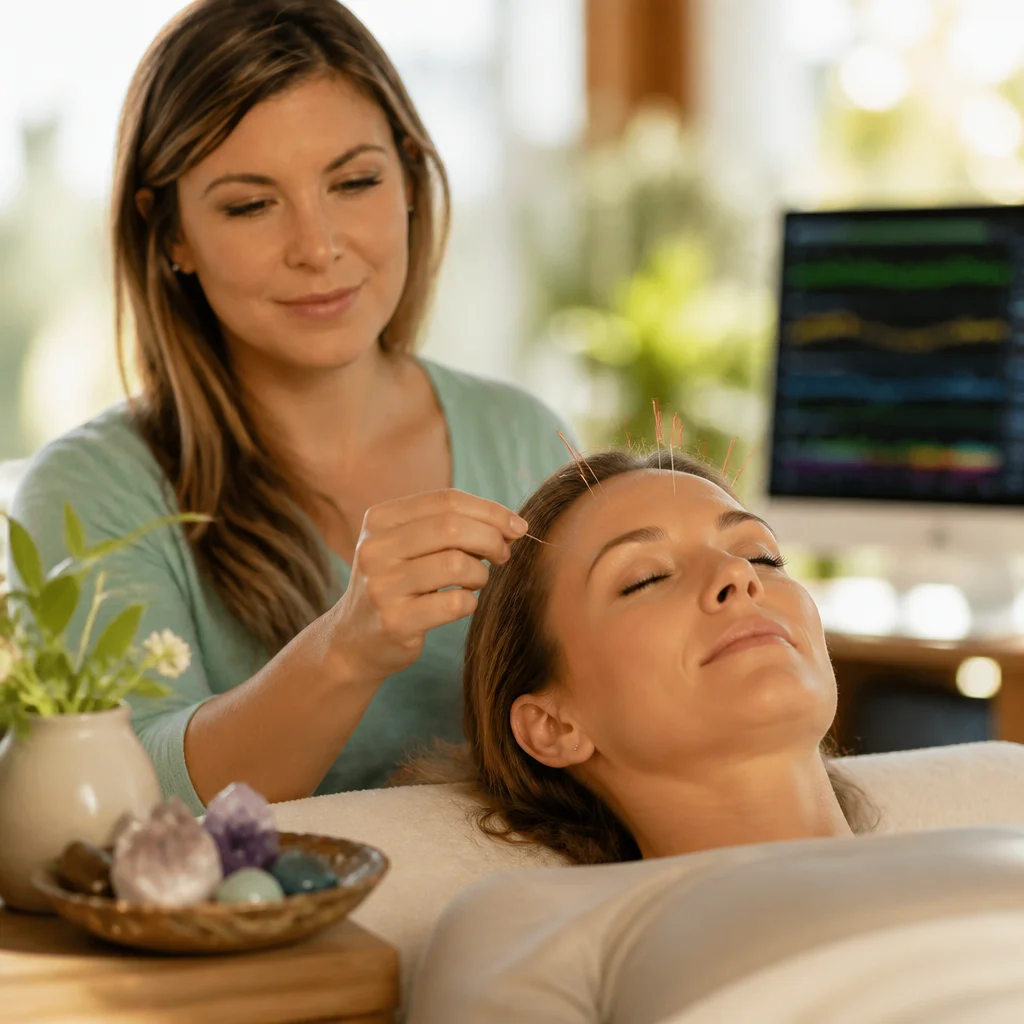
Our team assesses:
- Heart rate variability (HRV) – A sophisticated measure of your nervous system’s flexibility. Higher HRV indicates better capacity to shift between stress and rest states. We use clinical-grade devices to track this weekly.
- Salivary cortisol patterns – Collected across the day (morning, noon, evening) to reveal whether your stress hormone follows a healthy rhythm or remains chronically elevated.
- Blood pressure and resting heart rate – Simple, reliable markers that shift noticeably as acupuncture helps your nervous system recalibrate.
- Sleep architecture data – Duration, latency (time to fall asleep), and deep sleep percentage, tracked through validated wearable devices.
- Symptom-specific tracking – Tension headaches per month, anxiety episodes, digestive function, menstrual regularity—whatever manifests your stress response.
These markers aren’t vanity metrics. They directly correlate with your long-term health trajectory and resilience.
Physiological Measures That Prove Acupuncture’s Impact
Acupuncture works through specific physiological channels. Traditional Chinese Medicine describes these as meridian pathways; modern neuroscience shows that acupuncture stimulates vagal tone, triggers opioid release, and modulates inflammatory cytokines. The result: measurable shifts in your body’s chemistry.
We’ve observed consistent patterns in our clients. Within two to three weeks of regular acupuncture for stress, most patients show:
- Improved HRV scores (often a 15-25% increase over baseline)
- Normalized evening cortisol levels (which often drop from elevated readings to healthy range)
- Reduced nighttime awakening and increased deep sleep duration
- Lower resting blood pressure, particularly for those with stress-driven hypertension
These aren’t guaranteed outcomes—individual variation exists—but they’re the physiological signature of successful stress acupuncture. We track them because they’re objective, repeatable, and predictive of sustained wellbeing.
The Role of Functional Lab Testing in Stress Acupuncture
This is where our approach diverges from standard acupuncture practices. We integrate functional lab testing to uncover what stress has disrupted beneath the surface.
Chronic stress depletes nutrients, dysregulates blood sugar, impairs immune tolerance, and disrupts the gut barrier. We order comprehensive panels that assess:
- Inflammatory markers (hs-CRP, inflammatory cytokine profiles)
- Thyroid function and antibodies (stress frequently suppresses thyroid output)
- Metabolic health (fasting glucose, insulin, lipid patterns)
- Nutritional status (B vitamins, magnesium, vitamin D)
- Gut integrity markers and microbiome composition
- Hormonal balance (especially in women experiencing stress-related cycle disruption)
Acupuncture addresses the root pattern; lab testing identifies the specific tissues and systems most affected. Together, they guide a truly personalized protocol. A patient with stress-driven inflammation will benefit from acupuncture point selection and functional nutrition recommendations designed specifically to cool inflammatory pathways.
Creating Your Personalized Outcome Dashboard
We design each client’s outcome dashboard collaboratively, using the markers most relevant to your specific stress presentation and health goals.

Your dashboard might include:
- Monthly HRV average (target: consistent improvement or stability in your personal optimal range)
- Cortisol rhythm integrity (are morning levels energizing, evening levels low?)
- Sleep metrics (total duration, sleep quality score, deep sleep percentage)
- Symptom frequency or intensity (headaches, anxiety episodes, digestive symptoms)
- Functional lab trends (cortisol levels, inflammatory markers, thyroid function—retested at 8-12 weeks and 6 months)
- Subjective wellbeing score (your own 1-10 assessment of stress, calm, vitality, focus)
- Performance and lifestyle metrics (productivity, exercise recovery, mood stability, relationship quality)
We review your dashboard together at each visit. This isn’t abstract data—it’s your evidence. You see exactly what’s changing and why your body is responding.
Month-by-Month Progress: What to Expect From Treatment
Timeline expectations vary by individual, but patterns emerge consistently.
Weeks 1-2: Immediate nervous system shift. Many clients report deeper sleep, reduced muscle tension, or a sense of calm clarity. HRV may fluctuate as your nervous system begins rebalancing.
Weeks 3-4: Baseline stabilization. Sleep improves noticeably. Anxiety episodes decrease in frequency or intensity. Cortisol patterns begin normalizing, particularly evening levels.
Month 2: Sustained improvement. You notice you’re handling stressors with greater resilience. Sleep remains solid. Inflammation markers begin trending downward if they were elevated.
Month 3 and beyond: Root-level shifts. At this point, we review lab testing and see meaningful changes in cortisol patterns, inflammatory markers, and thyroid function (if dysregulated). The acupuncture isn’t just masking stress—it’s restoring your system’s capacity to manage it.
How We Integrate Acupuncture Outcomes With Nutrition and Lifestyle
Acupuncture alone doesn’t sustain long-term transformation. We integrate functional nutrition and personalized health coaching to reinforce and amplify the physiological changes acupuncture initiates.
This looks like: Acupuncture addresses your nervous system dysregulation; simultaneously, we guide you toward foods and eating patterns that stabilize blood sugar and support gut barrier integrity. Acupuncture restores sleep quality; we optimize your evening routine to protect it. Acupuncture reduces inflammatory load; we identify and eliminate dietary triggers specific to your inflammatory profile.
Each dimension of our protocol is measurable. Nutritional changes shift your metabolic markers. Sleep optimization is tracked on your dashboard. Lifestyle adjustments reinforce the nervous system recalibration from acupuncture.
When these three elements align—acupuncture, nutrition, and lifestyle design—the results compound. Your outcome dashboard shows not incremental improvement but genuine, sustained transformation.
Beyond Symptom Relief: Root Cause Resolution and Prevention

We measure success not by symptom absence but by system restoration. This is the distinction between treating stress and resolving what caused the stress dysregulation in the beginning.
Measuring outcomes for root cause acupuncture means asking: Has your nervous system regained its inherent flexibility? Can you access both alert focus and deep rest appropriately? Have we corrected the nutritional and hormonal deficiencies stress created? Are your inflammatory markers normal? Is your circadian rhythm intact?
These markers represent true prevention. A client whose cortisol rhythm is normalized and HRV is optimized isn’t simply feeling less stressed—they’ve restored their physiological capacity to handle future stress without collapse. That’s durable health.
Why Your Acupuncture Outcomes Matter Long-Term
The data you collect over three to six months isn’t merely feedback on current treatment. It’s a baseline for your longevity strategy. Normalized cortisol rhythm, optimized sleep, and restored inflammatory balance are predictive of better metabolic health, cardiovascular resilience, cognitive function, and fertility outcomes over decades.
When you invest in measuring and achieving real acupuncture outcomes, you’re not optimizing for comfort in the next month. You’re architecting your long-term vitality.
Your outcomes become your accountability, your evidence, and your roadmap forward. This is precision healthcare—the kind our most discerning clients expect and deserve.
Ready to establish your baseline and begin tracking real results? We invite you to schedule a consultation where we’ll design your personalized outcome dashboard and explain exactly how we’ll measure your transformation. Contact us at https://www.wellfitstudio.com or call our Boston clinic to begin.
Frequently Asked Questions (FAQ)
How do we measure acupuncture results beyond just “feeling better”?
We track stress relief through multiple objective markers including heart rate variability, cortisol levels, and sleep architecture—all measured through functional lab testing. Beyond these physiological measures, we monitor your progress with personalized outcome dashboards that capture energy levels, pain scores, hormonal balance, and cognitive clarity. This multi-dimensional approach gives us concrete data about what’s actually shifting in your body, not just your perception of improvement.
What can we expect to see month-by-month during stress acupuncture treatment?
Most of our clients notice initial shifts in sleep quality and anxiety levels within the first two to three weeks. By month two, we typically see measurable changes in cortisol patterns and reduced inflammatory markers on lab work. Deeper root-cause improvements in hormonal balance and sustained stress resilience generally emerge by months three through six, depending on your individual constitution and how long your stress patterns have been established.
How does stress acupuncture fit into a broader treatment plan at our clinic?
We integrate acupuncture outcomes with functional medicine assessments, nutrition coaching, and lifestyle optimization to address the complete picture of your stress response. Your acupuncture progress informs our nutritional recommendations and vice versa, creating a coordinated approach that accelerates healing. We view stress relief as foundational to resolving chronic issues, which is why we combine these modalities to ensure lasting results rather than temporary symptom management.


