

An Integrative Synthesis of Acupuncture and Functional Medicine
- Why Sciatica Pain Disrupts Your Life and Career
- The Limitations of Conventional Treatments: Surgery and Injections
- How Acupuncture Addresses the Root Cause of Sciatica
- Our Integrative Approach: Combining Acupuncture with Functional Medicine
- The Science Behind Acupuncture for Nerve Pain Relief
- What to Expect During Your First Acupuncture Treatment at WellFit Studio
- Personalized Treatment Plans: Beyond One-Size-Fits-All Care
- Functional Lab Testing to Identify Underlying Causes
- Complementary Therapies: Nutrition and Lifestyle Coaching for Long-Term Relief
- Real Results: How Our Patients Reclaim Pain-Free Living
- Getting Started: Your Path to Natural Sciatica Recovery
- Frequently Asked Questions (FAQ)
Why Sciatica Pain Disrupts Your Life and Career
Sciatica isn’t just discomfort. For the accomplished professionals we work with in Boston, it’s a career disruptor. The sciatic nerve runs from your lower back through your hips and down each leg, and when it becomes compressed or irritated, the resulting pain can make sitting through meetings unbearable, limit your gym routine, or force you to cancel important travel.
Many of our patients describe the sensation as a sharp, burning, or tingling pain that radiates down one leg. Some experience numbness or weakness that affects their gait and confidence. The condition often emerges gradually, starting as a dull ache before escalating into something that demands your attention.
What makes sciatica particularly frustrating is its unpredictability. You might wake up fine, then struggle through an afternoon because of a tight muscle, poor posture at your desk, or inflammation from an underlying imbalance that no one has yet identified. Unlike acute injuries, sciatica often signals that something deeper is out of alignment, and conventional approaches frequently treat only the symptom, not the cause.
The Limitations of Conventional Treatments: Surgery and Injections
Conventional medicine typically offers a narrow range of solutions: physical therapy, anti-inflammatory medications, corticosteroid injections, or surgery. While these approaches help some patients, they come with significant trade-offs.
Epidural steroid injections provide temporary relief by reducing inflammation around the nerve, but they don’t address why the inflammation developed in the first place. Results often fade within weeks or months, and repeated injections carry cumulative risks. Surgery, presented as a definitive solution, carries its own concerns: prolonged recovery, scar tissue formation, and the reality that back surgery doesn’t always resolve pain completely.
For high-performing professionals, these conventional routes mean lost productivity, time away from work, potential dependency on pain medication, and no real investigation into root causes. We’ve worked with executives who underwent surgery only to experience recurring sciatica months later because the underlying dysfunction was never addressed. The frustration is understandable when you’ve done everything “by the book” and still struggle.
What’s missing from conventional care is a systems-level perspective. Sciatica rarely develops in isolation. It typically reflects muscle imbalances, postural patterns, inflammatory states, hormonal shifts, or nutritional deficiencies that create the conditions for nerve compression. Without identifying these factors, relief remains temporary.
How Acupuncture Addresses the Root Cause of Sciatica
Acupuncture works fundamentally differently than injections or surgery. Rather than suppressing inflammation or removing tissue, we use strategic needle placement to restore function and signal your body’s natural healing response.
From a traditional Chinese medicine perspective, sciatica often reflects stagnation in energy (qi) and blood flow along specific meridians. The sciatic nerve pathway corresponds to channels that our practitioners understand intimately. By placing needles at precise points, we help restore circulation, relieve muscle tension, and rebalance the nervous system.
The practical result is remarkable: many patients notice reduced pain within the first few sessions. Needle placement is never random. We assess which specific muscles are triggering nerve compression, where inflammation is most active, and how your individual constitution plays a role. This personalized assessment is what distinguishes acupuncture from a generic approach.
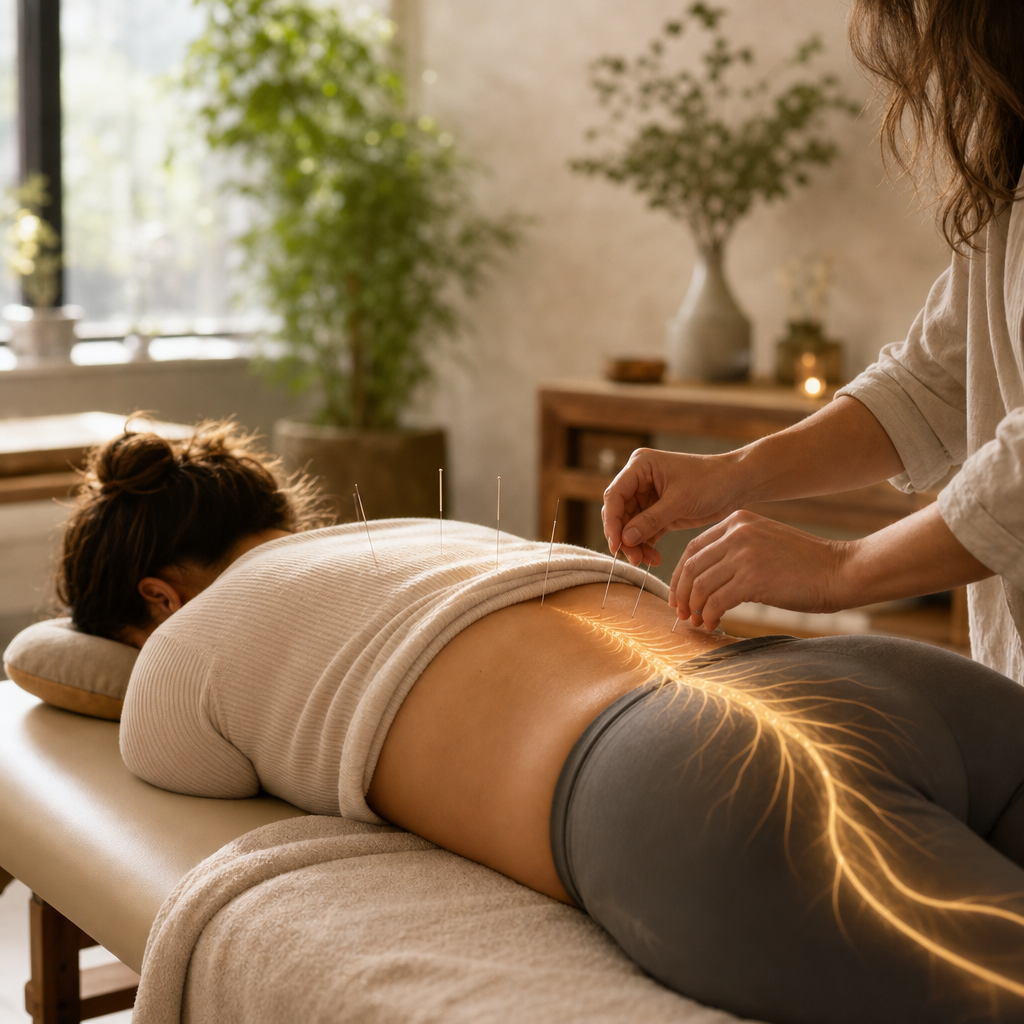
One of the most compelling aspects of acupuncture for sciatica is its ability to address both the acute pain and the underlying dysfunction simultaneously. While you feel relief, your body is simultaneously healing the deeper imbalances that caused the problem.
Our Integrative Approach: Combining Acupuncture with Functional Medicine
At WellFit Studio, we don’t treat sciatica with acupuncture alone. We combine it with functional medicine principles to create a comprehensive strategy that targets root causes from multiple angles.
Here’s how this works in practice: Your initial assessment includes detailed evaluation of your movement patterns, posture, and lifestyle. We examine your medical history for clues about inflammation, metabolic imbalances, or hormonal factors that might be contributing to nerve sensitivity. We ask about your work setup, sleep quality, stress levels, and past injuries, because sciatica rarely develops from a single factor.
From there, we combine acupuncture sessions with functional lab testing, targeted nutritional adjustments, and personalized movement coaching. This multi-layered approach addresses the inflammation triggering nerve pain, restores optimal nerve function, and corrects the postural and metabolic patterns that created vulnerability in the first place.
Many patients are surprised by how much their sciatica improves when we address underlying issues like gut inflammation, nutrient deficiencies, or chronic muscle tension patterns. The acupuncture accelerates healing, while functional medicine prevents recurrence.
The Science Behind Acupuncture for Nerve Pain Relief
If you’re analytical and evidence-focused, you’ll appreciate what research reveals about acupuncture’s mechanisms. When we insert needles, we’re triggering multiple physiological responses that converge to reduce pain.
Acupuncture stimulates the release of endorphins and other pain-modulating neurotransmitters, effectively shifting your nervous system out of high alert. It reduces inflammatory markers like cytokines and prostaglandins, which are often elevated in conditions causing nerve compression. Functional imaging shows that acupuncture alters activity in brain regions associated with pain perception and emotional response to discomfort.
At the local level, needle insertion prompts increased blood flow to tissues, delivering oxygen and nutrients while clearing metabolic byproducts that contribute to inflammation. For the sciatic nerve, this means improved cellular environment and faster tissue repair.
The cumulative effect is neither placebo nor temporary. Neuroplasticity research shows that consistent acupuncture treatment can help retrain your nervous system, reducing pain signaling even weeks after treatment ends. This is why a structured treatment course produces lasting results rather than fleeting relief.
What to Expect During Your First Acupuncture Treatment at WellFit Studio
Your first visit begins with comprehensive assessment, not immediately with needles. We’ll discuss your pain history, when it started, what makes it better or worse, and how it affects your daily life and professional performance.
Our practitioners conduct physical examination to identify which muscles are tight, assess your posture and movement quality, and locate tender points along the sciatic nerve pathway. We may perform orthopedic tests to pinpoint whether your pain originates from the lower back, piriformis muscle, or other sources. This precision is crucial, because the specific source of compression determines needle placement.
Once we understand your situation, treatment begins. Needles are hair-thin and insertion is typically painless. You’ll feel a subtle sensation (acupuncturists call it “de qi”) as the needle engages the tissue, followed by relaxation. Most people describe the experience as deeply calming. We leave needles in place for 20-30 minutes while you rest in a quiet room, during which many patients drift toward sleep.
After needle removal, we’ll discuss what to expect over the next few days and provide practical guidance about movement, ice or heat, and activity modification. We’ll also recommend a treatment schedule and discuss complementary strategies we’re recommending.

Personalized Treatment Plans: Beyond One-Size-Fits-All Care
Generic treatment protocols don’t work for sciatica, and we don’t use them. Your treatment plan is built around your specific situation, not a template.
If your sciatica stems primarily from piriformis tightness and postural imbalance, your plan emphasizes acupuncture combined with movement coaching and ergonomic adjustment. If inflammation is elevated, we integrate functional lab testing and nutritional therapy. If you’ve been stressed and sleeping poorly, we address nervous system regulation alongside physical treatment.
We typically recommend 2-3 sessions weekly for the first 3-4 weeks, then adjust frequency based on your response. Some people experience significant improvement within two weeks, while others need a longer course as deeper tissue rebalancing occurs. There’s no single timeline, which is why flexibility and individualization matter.
We also build a clear progression plan so you understand what improvement looks like, when we expect to see specific changes, and how we’ll adjust strategy if progress plateaus. This clarity helps busy professionals feel in control and confident about their care.
Functional Lab Testing to Identify Underlying Causes
Acupuncture provides rapid pain relief, but functional lab testing reveals why your body became vulnerable to sciatica in the first place.
We may recommend bloodwork assessing inflammation markers like high sensitivity C-reactive protein, markers of metabolic health, nutrient status (magnesium, vitamin D, and B vitamins are particularly relevant for nerve function), and hormonal balance. For some patients, we assess gut health through specialized stool testing, because chronic gut inflammation often drives systemic inflammation affecting nerve function.
These labs are not standard medical workups. We’re looking deeper for dysfunctions that conventional testing misses. A “normal” cholesterol panel might mask insulin resistance. Standard vitamin levels might not capture optimal ranges for nerve repair. We want complete information to build a truly customized strategy.
Lab results inform targeted supplementation and dietary changes that support nerve healing at the cellular level. This is how functional medicine transforms pain management from symptom suppression into genuine restoration.
Complementary Therapies: Nutrition and Lifestyle Coaching for Long-Term Relief
Acupuncture and functional medicine testing create the foundation, but sustainable relief requires behavioral integration. We provide personalized nutrition guidance focused on reducing inflammatory foods and emphasizing nutrients critical for nerve function.
For many patients, this means moderating processed foods and refined carbohydrates that amplify inflammation, increasing omega-3 fatty acids and antioxidants that support nerve tissue, and optimizing protein intake to maintain muscle integrity and postural stability. We’re not prescribing restriction or complicated meal plans, but rather strategic adjustments that fit your lifestyle.
Movement coaching addresses postural patterns, ergonomic setup at your workspace, and specific exercises that decompress the sciatic nerve and strengthen stabilizing muscles. We teach you how to modify activities so you’re not reinjuring yourself while healing occurs.
Sleep quality, stress management, and movement frequency are equally important. We provide evidence-informed guidance on these lifestyle factors because they directly influence inflammation, nervous system regulation, and healing capacity.

Real Results: How Our Patients Reclaim Pain-Free Living
The transformation we see in our patients with sciatica is consistent and meaningful. High-performing professionals who were limiting workouts, canceling travel, or considering surgery find themselves returning to normal activity within 6-12 weeks of integrated treatment.
One accomplished executive noticed significant relief within two weeks of acupuncture combined with targeted nutrition changes addressing underlying inflammation. Another patient with chronic sciatica triggered by postural stress at her desk found that acupuncture plus ergonomic adjustment and movement coaching resolved pain that had persisted despite years of physical therapy.
What makes these outcomes sustainable is that patients understand why they improved. They’ve corrected the postural patterns, addressed nutritional imbalances, and rebalanced their nervous system. They’re not just temporarily pain-free; they’ve eliminated the conditions that created vulnerability.
Getting Started: Your Path to Natural Sciatica Recovery
If you’re experiencing sciatica and want to explore acupuncture and functional medicine rather than conventional interventions, our first step is straightforward. Schedule a consultation with our practitioners, who will assess your situation comprehensively and discuss whether our integrative approach aligns with your health goals.
Bring details about your pain history, any previous treatments you’ve tried, current medications or supplements, and information about your work environment and lifestyle. The more we understand upfront, the more strategic we can be with your care.
We’ll explain exactly what we recommend, why, and what timeline you can expect for improvement. We’ll be transparent about what acupuncture can address and when functional medicine testing or other approaches become necessary. This clarity allows you to make confident decisions about your care.
Sciatica doesn’t have to derail your career or compromise your quality of life. With evidence-informed acupuncture, functional medicine, and personalized lifestyle guidance, we help you address the root causes and reclaim pain-free movement. When you’re ready to explore this integrative path, we’re here to guide you.
Frequently Asked Questions (FAQ)
How does acupuncture help with sciatica pain compared to surgery or injections?
We use acupuncture to address the root cause of your sciatic nerve pain rather than simply masking symptoms. Our approach stimulates the body’s natural healing response, reduces inflammation around the nerve, and restores proper nerve function. Unlike surgery, which carries risks and recovery time, or injections that provide temporary relief, acupuncture supports your body’s own repair mechanisms for lasting results.
What makes your treatment different from standard acupuncture clinics?
We combine acupuncture with functional medicine diagnostics to understand why your sciatica developed in the first place. Our team uses functional lab testing to identify underlying factors like muscle imbalances, nutritional deficiencies, or structural issues that contribute to your nerve pain. We then create a personalized treatment plan that may include acupuncture, nutrition coaching, and lifestyle modifications tailored specifically to your situation.
How long does it typically take to see improvement in sciatica pain?
Most of our patients begin noticing relief within three to five sessions, though the timeline varies based on how long you’ve had symptoms and the underlying cause. We recommend an initial series of treatments to build momentum, then reassess your progress together. Our goal is to get you to sustained pain relief so you can return to the activities and career demands that matter most to you.


