

Table of Contents
- 1. Understanding Trauma-Informed Acupuncture and Nervous System Healing
- 2. Gentle Point Selection for Anxiety-Sensitive Patients
- 3. Breathwork Integration During Acupuncture Sessions
- 4. Vagal Tone Stimulation Through Strategic Needle Placement
- 5. Safe Space Creation for Emotional Processing
- 6. Functional Medicine Diagnostics to Address Root Causes
- 7. Personalized Wellness Protocols Beyond the Needle
- Frequently Asked Questions (FAQ)
1. Understanding Trauma-Informed Acupuncture and Nervous System Healing
Anxiety rooted in past trauma requires more than symptom suppression. It demands a nervous system that feels genuinely safe enough to heal. This is where trauma-informed acupuncture differs fundamentally from conventional needle placement: we recognize that your body holds memory, and healing demands precision, permission, and presence.
At Wellfit Studio, we’ve built our acupuncture practice around the understanding that trauma lives in the nervous system. A practitioner trained in trauma-informed care doesn’t just insert needles; we create conditions where your parasympathetic nervous system can activate, your guard can lower, and authentic resolution becomes possible. The techniques outlined here reflect our evidence-informed approach to somatic healing through acupuncture, designed specifically for professionals navigating both high performance and deep healing.
Trauma-informed acupuncture begins with a simple truth: your nervous system learned to protect you. When that protection becomes chronic anxiety, the nervous system hasn’t failed; it’s working exactly as designed. Conventional acupuncture may address pain or inflammation. Trauma-informed acupuncture addresses the underlying dysregulation that keeps your system locked in fight-or-flight.
The distinction matters. We work with specific point combinations, needle depths, and retention times calibrated to down-regulate your nervous system rather than stimulate it. The goal is to move you from sympathetic dominance (that constant low-hum of vigilance) into parasympathetic activation (genuine rest and restoration).
Research in somatic psychology and neurobiology confirms that acupuncture can modulate vagal tone, shift heart rate variability, and reduce cortisol when delivered with intention. We measure this not through theoretical models but through how our patients report feeling: calmer within sessions, sleeping deeper at night, and gradually needing fewer anxiety management tools to navigate their day.
Your next step: If you’ve tried conventional acupuncture without lasting relief from anxiety, consider scheduling a consultation to discuss how trauma-informed protocols differ. We’ll assess your nervous system presentation and design a protocol specific to your history.
2. Gentle Point Selection for Anxiety-Sensitive Patients
Anxiety-sensitive patients often carry a protective reflex around acupuncture itself. You may have experienced needles before and felt more activated rather than calmed. This isn’t a failure of acupuncture; it’s a mismatch between point selection and your particular nervous system state.
We prioritize gentle, calming points that activate your parasympathetic nervous system without overwhelming sensation. Heart 7 (Spirit Gate) and Pericardium 8 (Palace of Labor) are classical anxiety points, but we use them strategically and at shallower depths for trauma-sensitive presentations. Stomach 36 and Spleen 6 support grounding and emotional resilience. Conception Vessel 4 (Gate of Origin) addresses deep constitutional anxiety.
The art lies in point combination. Rather than maximum stimulation, we layer points that work synergistically to create a coherent nervous system response. This means fewer needles placed with intention, often retaining them for longer periods at minimal stimulus. Many of our patients describe the experience as meditative rather than clinical.
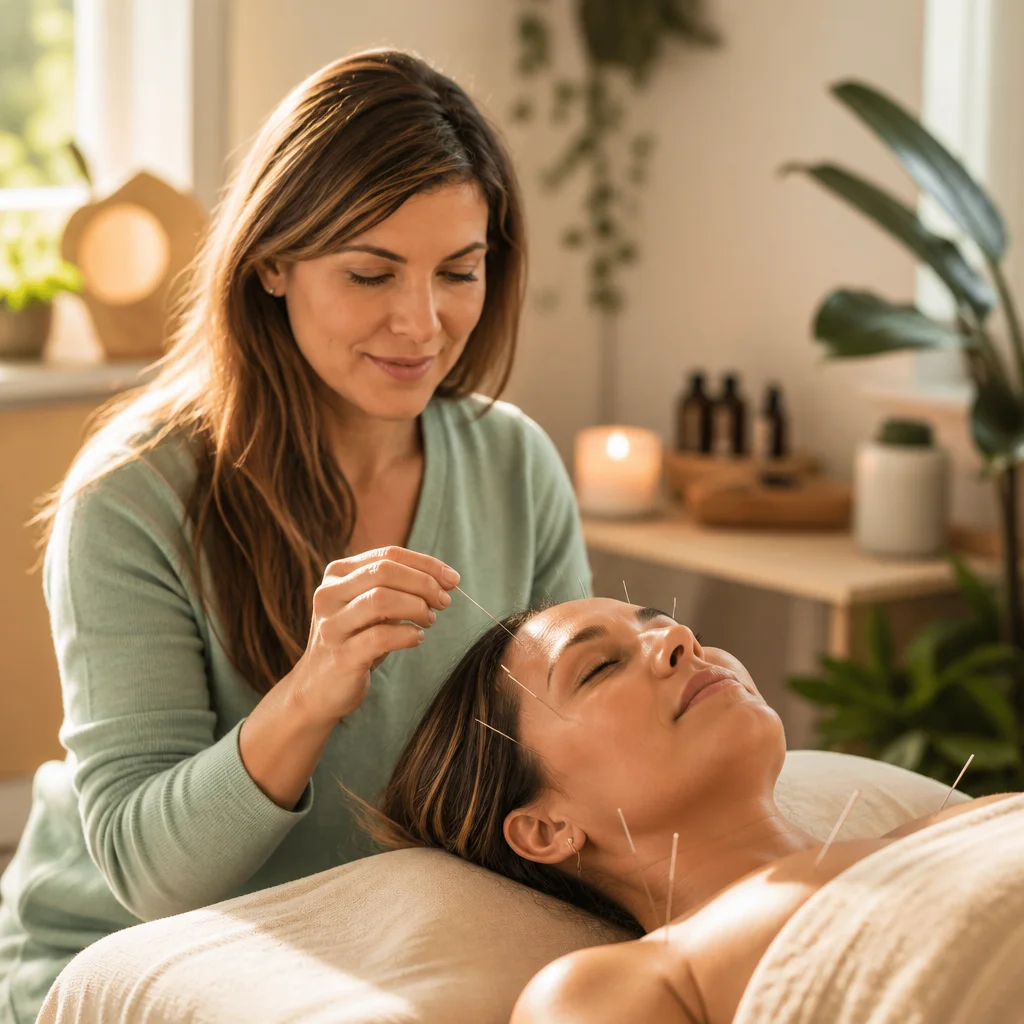
Contraindicated or cautiously applied points matter too. We avoid aggressive abdominal needling in trauma survivors, deep chest points that might trigger claustrophobia, or any approach that feels invasive to your history. Every point is chosen with consent and explanation.
Your next step: Before your first session, describe any previous acupuncture experiences, needle sensitivities, or trauma triggers to your practitioner. This information directly shapes our point selection and technique.
3. Breathwork Integration During Acupuncture Sessions
A needle without breath is incomplete. We integrate specific breathwork patterns before, during, and after needling to maximize nervous system regulation. Your breath is the bridge between conscious awareness and autonomic response.
Before needle insertion, we guide you into a grounded breathing pattern: longer exhales than inhales, which directly activates your vagus nerve and parasympathetic tone. This primes your nervous system to perceive the acupuncture as supportive rather than threatening. During needle retention, gentle coaching helps you maintain that calm breathing rhythm, turning the session into an active practice rather than passive reception.
Many patients report that breathwork becomes a portable tool they can use outside the clinic. When anxiety arises during a high-stakes meeting or in the evening before sleep, they recall the breathing pattern taught during acupuncture and activate the same calm state they learned on our table. This is somatic learning at its finest.
We teach specific patterns: box breathing for grounding, extended exhale breathing for parasympathetic activation, and belly breathing to release chest tension. These techniques aren’t abstract wellness advice; they’re calibrated to complement needle placement and maximize the neurobiological shift we’re creating together.
Your next step: Ask your practitioner to teach you one specific breathwork technique you can practice daily. Consistency matters more than complexity.
4. Vagal Tone Stimulation Through Strategic Needle Placement
Your vagus nerve is the primary pathway of parasympathetic activation. Improving vagal tone means your nervous system can more readily shift from stress to calm. Strategic acupuncture point selection directly stimulates vagal pathways, creating measurable changes in heart rate variability and perceived anxiety.
Points along the ear, neck, and torso have documented vagal connections. Ear points like Shenmen (Spirit Gate) and the Vagus point itself offer accessible vagal stimulation. Along the body, points like Stomach 9 (Man’s Welcome) sit directly on structures that influence vagal signaling. We don’t use all of these simultaneously; we layer them based on your presentation.
The depth and angle of needle insertion also matter. A needle placed to gently contact vagal pathways without aggressive stimulation can down-regulate your system. We’re looking for a subtle “arrival” sensation rather than sharp pain. Many patients describe it as a warm, spreading sensation or deep relaxation moving through their body.
Vagal tone improvement doesn’t happen in a single session. We build it progressively, and you may notice changes over two to four weeks: your resting heart rate drops, you recover more quickly from stress, sleep deepens. These aren’t dramatic transformations; they’re the quiet reestablishment of your nervous system’s capacity to self-regulate.
Your next step: Track your resting heart rate and sleep quality for one week before your first session, then again after your third visit. This objective data often reveals improvements you might otherwise miss.

5. Safe Space Creation for Emotional Processing
Acupuncture can surface emotions. Anxiety has often been managed through suppression; when your nervous system finally feels safe, stored tension and emotion may emerge. A trauma-informed practitioner creates conditions where this is expected, welcomed, and held with care.
Our treatment rooms are designed for safety and discretion: soft lighting, warm temperature, private spaces where you won’t be interrupted. We explain every step before it happens, we ask permission, and we maintain clear communication throughout. If something feels wrong, we stop and adjust. Your sense of agency and control is fundamental to healing.
During sessions, we might notice you becoming tearful, taking a deep breath as if a burden has lifted, or moving into deeper relaxation than you expected. These are signs your nervous system is processing. We don’t pathologize these responses or rush them. Instead, we hold space and let your body complete what it needs to release.
After sessions, many patients experience a mild emotional window, sometimes called “acupuncture flu.” This temporary vulnerability is actually part of the healing arc, not a side effect to minimize. We guide you through integration practices so you can metabolize the session’s benefits without becoming overwhelmed.
Your next step: After your session, allow yourself rest, hydration, and minimal stimulation. Don’t schedule a high-stress meeting or demanding workout immediately after. Give your nervous system time to consolidate the shift.
6. Functional Medicine Diagnostics to Address Root Causes
Acupuncture excels at nervous system regulation, but lasting anxiety relief requires addressing root causes. We combine trauma-informed acupuncture with comprehensive functional medicine diagnostics to identify what’s driving your anxiety at a physiological level.
Chronic anxiety often coexists with dysregulated cortisol patterns, inflammatory markers, blood sugar dysregulation, nutrient deficiencies, or hormonal imbalances. Standard anxiety screening misses these entirely. We order targeted functional lab testing: cortisol awakening response, inflammatory cytokines, micronutrient levels, and thyroid function. These results reveal the physiological foundation beneath your anxiety symptoms.
A patient might report anxiety that feels biochemical, intrusive, and unresponsive to talk therapy alone. Functional testing reveals elevated inflammatory markers and depleted magnesium. Acupuncture begins nervous system regulation while targeted nutrition and supplementation address the inflammatory and micronutrient picture. Together, these interventions work synergistically, often producing relief that neither alone could achieve.
We design integrated treatment plans that honor both somatic (nervous system) and biochemical (functional) dimensions of your healing. This is root-cause acupuncture in its truest form: precision medicine that meets you where you actually are.
Your next step: Schedule a functional medicine assessment alongside your acupuncture protocol. Request functional lab testing to identify biochemical contributors to your anxiety.
7. Personalized Wellness Protocols Beyond the Needle
Acupuncture is one powerful tool within a broader healing ecosystem. We design personalized wellness protocols that extend your nervous system gains far beyond the treatment room through targeted nutrition, health coaching, and lifestyle integration.

Your protocol might include herbal medicine formulated to support calm and resilience, personalized nutrition adjustments that stabilize blood sugar and reduce inflammatory anxiety triggers, or specific somatic practices we teach you to practice at home. High-achieving professionals often respond well to performance-focused framing: these aren’t indulgences, they’re precision optimizations of your nervous system and energy.
We also address the conditions that maintain anxiety: sleep quality, movement patterns, stress management capacity, and relational dynamics. Our health coaches work with you on practical implementation, understanding that knowing what to do and actually doing it consistently are entirely different challenges. We meet you at the point of real life, with real constraints.
The endpoint of our care isn’t dependence on acupuncture; it’s your independent capacity to maintain the nervous system resilience we’ve built together. We measure success by how many of our patients eventually need fewer sessions because they’ve integrated practices that create lasting calm.
Your next step: Book a comprehensive wellness consultation to design a protocol tailored to your full picture. Come with your health history, current challenges, and aspirations for how you want to feel.
—
Anxiety rooted in trauma demands more than surface-level symptom management. It requires a practitioner trained in nervous system science, trauma responsiveness, and the integration of somatic and functional medicine approaches. At Wellfit Studio, we’ve built our practice around precisely this integration. Our trauma-informed acupuncture protocols are designed for accomplished professionals who refuse to settle for mediocre care and expect results backed by precision, evidence, and genuine expertise.
If you’re ready to move beyond anxiety management into true nervous system healing, we invite you to experience our concierge-level approach. Schedule your consultation today, and let’s design the personalized protocol that finally moves you forward.
Frequently Asked Questions (FAQ)
How do we approach acupuncture differently for anxiety and trauma-related symptoms?
We integrate trauma-informed principles throughout every session, recognizing that anxiety often stems from nervous system dysregulation rather than isolated symptoms. Our practitioners use gentle point selection, strategic breathwork cues, and vagal stimulation techniques to help your body feel genuinely safe during treatment. We also combine acupuncture with functional medicine diagnostics to identify root causes like hormonal imbalances, inflammatory markers, or nutritional deficiencies that may be fueling your anxiety.
What can I expect during my first anxiety-focused acupuncture appointment at WellFit Studio?
We begin by listening carefully to your full health history and any trauma patterns that influence your nervous system response. During the session, we create a safe, comfortable environment where you can process emotions, guide your breathing intentionally, and experience needle placement that supports rather than triggers your system. After your appointment, we develop a personalized wellness protocol that may include nutrition coaching, targeted supplements, or follow-up sessions designed specifically for your nervous system healing.
How long does it typically take to notice relief from anxiety using your approach?
Many of our clients report feeling calmer and more grounded within 3 to 4 sessions, though deeper nervous system regulation and sustained relief usually develop over 8 to 12 consistent treatments. We monitor your progress closely and adjust our protocols based on how your body responds, ensuring we’re addressing the foundational imbalances driving your anxiety rather than just masking symptoms temporarily.


